
OEM / ODM services
Choose the development route that fits your starting point.
Beauty and personal-care OEM/ODM connects a buyer’s product brief to formula selection or development, sampling, packaging coordination, production confirmation and delivery planning. Begin with a mature formula, a defined product requirement or your own technical package.
Prepared Formula Route
Select an available direction, compare suitable samples, provide feedback and confirm the approved product basis.
Requirement-based ODM
Define format, texture, scent, audience and reference products before a custom sample route is scoped.
Client-supplied Formula
Provide the formula and supporting technical materials for review before trial sampling and responsibility alignment.
| Route | Best starting point | First buyer input | Customization depth |
|---|---|---|---|
| Prepared formula | An established product direction | Category, market and sample preference | Formula selection plus agreed sensory and packaging adaptations |
| Requirement-based ODM | A defined product concept | Format, texture, scent, audience and references | Custom sample work within the confirmed technical scope |
| Client-supplied formula | An existing technical package | Formula and supporting technical information | Feasibility, trial and responsibility review before confirmation |
Product direction in view
Use visual references to make the sample brief more precise.
Packaging silhouette, texture, finish, scent territory and assortment relationships can all inform the first technical review.

Scent, format and vessel direction
Align personal fragrance and home-scent formats around one coherent market position.
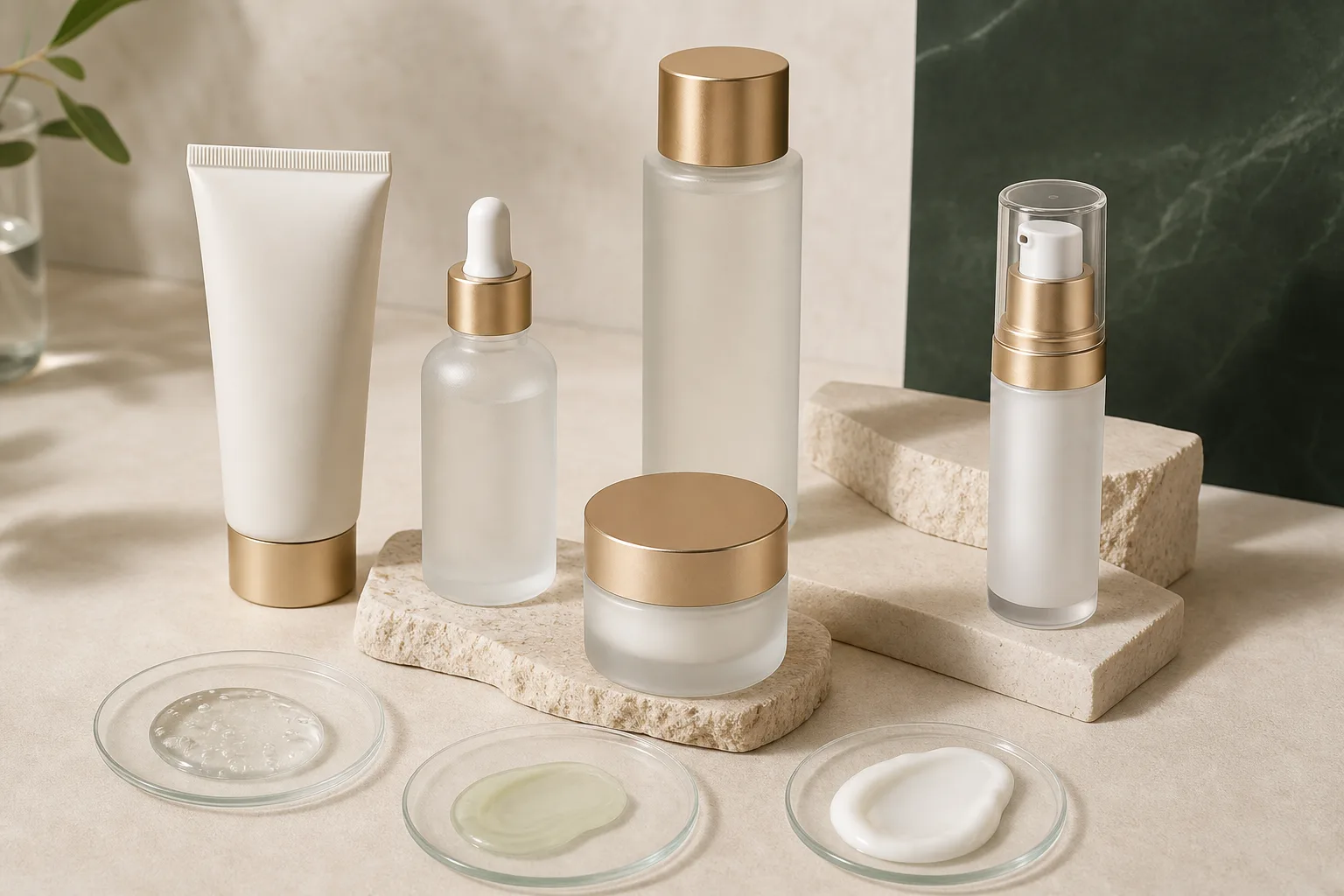
Texture, format and sensory target
Translate reference products into clearer cleanser, serum, cream and treatment decisions.
Shared project flow
All routes converge before production.
Only an approved scope moves forward. Availability, testing, records, timing and commercial terms remain specific to the written project.
- 01
Requirement Review
Confirm the product, market and starting route.
- 02
Formula & Sample Plan
Align the formula base and evaluation criteria.
- 03
Sample Evaluation
Record feedback against the agreed brief.
- 04
Packaging Alignment
Review compatible components and artwork needs.
- 05
Order Confirmation
Document the approved commercial and technical basis.
- 06
Production & Delivery
Coordinate production, records and handover.

What to prepare
A stronger brief shortens the distance to a useful sample.
- Product category and format
- Target audience, channel and market
- Texture, scent and finish references
- Packaging direction and quantity context
- Claims, exclusions and document questions
Buyer questions
OEM/ODM questions, answered clearly.
These answers define the normal starting point. Final specifications, commercial terms and destination-market requirements remain project-specific.
What products can Huaxia Impressions develop?
Current capabilities include perfume, home fragrance, skincare, sun and complexion care, bath and body, hair care and selected personal-care formats. Exact specifications and availability are reviewed against the project brief.
Which OEM or ODM route should a buyer choose?
Choose a prepared-formula route when speed and an established starting point matter, requirement-based ODM when a defined product concept needs custom sampling, or a client-supplied-formula review when a technical package already exists.
What information is needed to start?
Share the product category, format, target audience, sales channel, destination market, texture or scent references, packaging direction, quantity context and any claim or document questions.
Can packaging and artwork be coordinated with product development?
Yes. Vessels, closures, decoration, labels, cartons and artwork readiness can be reviewed alongside formula and sample decisions so compatibility and channel context are considered before final confirmation.
Are minimum order quantities and lead times fixed?
No universal quantity or lead-time promise is published. Both depend on product route, formula, packaging, testing, availability, destination market and the final written scope.